
A small bakery owner watches a delivery slip on an icy walkway outside her shop. That single moment reminds her why general liability insurance exists—it catches the financial fallout when accidents happen and third parties get hurt or property gets damaged.
Premiums rarely stay uniform across industries. Construction crews and manufacturing floors usually face steeper costs than a quiet retail boutique or a consulting desk.
Your company’s scale, zip code, past claims, and daily hazards all nudge the final number up or down. It’s worth sitting with these variables, understanding how they interweave, before settling on any policy.
What helps someone land a fair rate? It starts with honest self-assessment—knowing your real risks, not the ones you wish you had.
From there, you can weigh coverage options with clearer eyes and sharper confidence.
Average General Liability Insurance Costs by Industry
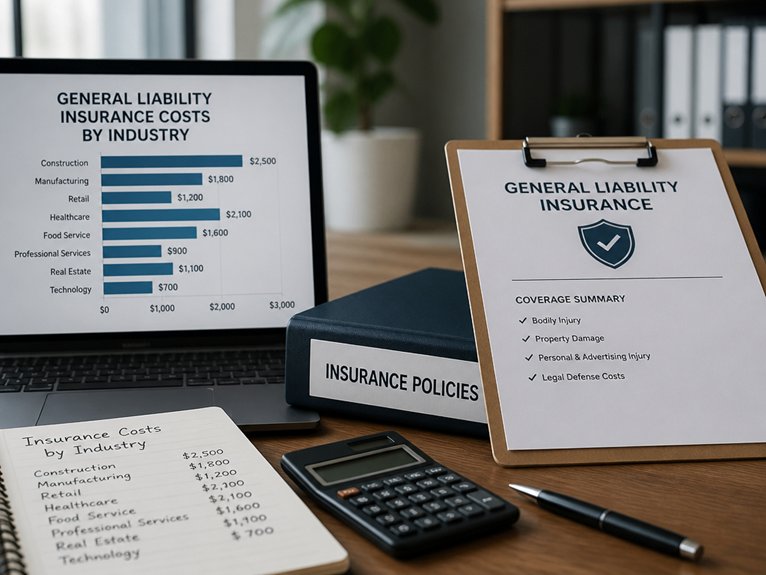
General liability insurance costs differ by industry. Each business type faces unique risks that affect pricing.
Professional Services
Consultants and accountants enjoy lower premiums. Most pay between $500 and $1,500 yearly. Their work involves minimal physical risk, which keeps costs down.
Construction and Contracting
Builders face steeper rates due to injury hazards. Annual premiums typically run $1,000 to $3,000. Job sites carry higher accident potential than office settings.
Retail Operations
Shops pay $750 to $2,000 depending on foot traffic and inventory. Busy stores with heavy customer flow edge toward the higher end.
Manufacturing
Factories see substantial premiums ranging from $2,000 to $5,000 plus. Equipment dangers and worker exposure drive up claim frequency.
Food Service
Restaurants and caterers spend $1,200 to $2,500 annually. Foodborne illness liability remains a persistent concern for these businesses.
What Shapes Your Rate
Business size, location, claims record, and coverage limits all matter. Each factor weighs into your final quote.
The 5 Key Factors That Determine Your Premium
Several elements shape what a business pays for general liability insurance. Understanding each one helps explain why quotes vary so widely.
Business Type and Industry
Your industry classification matters a lot. A construction company pays more than an accounting firm. That’s simply due to higher injury risks in building and trades.
Revenue and Payroll Size
Larger operations usually face greater exposure. So your revenue and payroll size directly affect your premium. More activity generally means more chances for claims.
Location
Where you operate affects costs too. Some areas have more frequent claims. Others have stricter local regulations. Both situations can raise your rates.
Claims History
Your track record determines pricing considerably. Businesses with previous incidents pay higher rates. Those with clean records enjoy better pricing.
Coverage Limits and Deductibles
The choices you make here directly influence your final premium. Lower deductibles cost more upfront. Higher limits also increase your costs.
These five factors work together to create individualized quotes. Each business receives a premium reflecting its unique risk profile.
How Your Business Size and Location Affect Your Rate
Business size plays a big part in what you pay. Larger operations usually face higher premiums. More employees mean more exposure and bigger payrolls.
A construction company with fifty workers pays far more than a solo consultant. The difference can be significant.
Location shapes your rates too. Insurance costs reflect local risk levels, past claims, and state rules. Urban areas typically carry higher premiums than rural spots.
A restaurant in New York City pays more than the same setup in a small town. These two factors alone can double or cut your costs in half. That makes them worth close attention as you plan your coverage and budget.
Get Your Accurate Quote in 4 Steps
Step 1: Gather Your Business Details
Start by collecting key information about your company. Note your annual revenue, employee count, and the services you provide. Insurers need this data to gauge your risk level properly.
Step 2: Find Your Industry Code
Locate your classification code. This code sets your baseline rate. Contractors pay different rates than accountants, for instance.
Step 3: Share Your Claims History
Be upfront about past claims or safety incidents. These affect your premium directly. A clean record often means better pricing.
Step 4: Compare Your Options
Review quotes from several insurers side by side. Check coverage limits, deductibles, and exclusions closely. This ensures you get fair pricing and the right protection for your business.
Quick Wins: 6 Ways to Lower Your Premium
Show Insurers You Manage Risk Well****
Your safety record matters. Fewer workplace incidents tell insurers your business is a smart bet. That can lead to better rates.
Small upgrades help too. Security cameras, alarm systems, and proper safety gear signal that you take loss prevention seriously.
Bundle Where You Can
Combine your general liability policy with property or other coverage. Many insurers discount these packages. You save money and simplify billing.
Adjust Your Deductible
Higher deductibles cut your monthly costs. Just make sure your business could cover that amount if a claim arises. Strike a balance that fits your budget.
Invest in Training
Safety certifications and staff training programs often unlock premium reductions. Check which courses your insurer recognizes. The upfront time usually pays off.
Keep Good Records
Track your claims history carefully. Clean, accurate documentation proves reliability. Insurers reward businesses with predictable, low-risk profiles.
Compare and Review Regularly
Prices vary across providers. Gather several quotes before renewing.
Once a year, examine your coverage limits. Drop protection you no longer need. Avoid overinsuring as your business changes.
General Liability vs. Other Business Insurance Coverage
What General Liability Covers
General liability insurance handles bodily injury and property damage claims. These usually come from customers or other third parties. But this policy won’t cover everything your business might face.
Filling the Gap: Service Errors
Professional liability insurance steps in when mistakes happen in your services. A missed deadline or faulty advice could lead to a lawsuit. This coverage helps protect service-based businesses from those risks.
Protecting Physical Assets
Property insurance covers your equipment, inventory, and buildings. Fire, theft, or storms could shut you down without it. This keeps your business assets secure when trouble hits.
Covering Your Team
Workers’ compensation takes care of employees hurt on the job. Medical bills and lost wages add up fast. Most states require this coverage once you hire staff.
Vehicles and Digital Threats
Commercial auto insurance covers business vehicles and drivers. Personal auto policies usually exclude work-related accidents. Cyber liability insurance handles data breaches and hacking incidents. Customer records and payment data need this protection.
Extra Protection
Umbrella policies kick in when your other limits run out. One major claim could drain your standard coverage. This added layer keeps your business from paying the rest alone.
Choosing Your Mix
Every business faces different risks. A retail store needs coverage that looks nothing like a consulting firm’s plan. Take time to spot where you’re vulnerable. Closing those gaps now saves you from hefty bills later.
Frequently Asked Questions
What Is the Minimum General Liability Insurance Coverage Required by Law?
Minimum general liability insurance requirements vary considerably by state and industry. Most states do not mandate a specific minimum coverage amount by law, though certain professions and contractors must carry coverage as a licensing condition.
Does General Liability Insurance Cover Employee Injuries or Lawsuits?
General liability insurance typically does not cover employee injuries or lawsuits. Employers must obtain workers’ compensation insurance instead to cover employee-related claims. General liability covers third-party bodily injury and property damage claims only.
How Long Does It Take to File a General Liability Claim?
Filing a general liability claim typically takes between one to three weeks, depending on claim complexity and documentation completeness. The insurer reviews submitted evidence, investigates the incident, and determines liability before processing payment or denial.
Can I Get General Liability Insurance With a Poor Business History?
Yes, businesses with poor histories can obtain general liability insurance, though they may face higher premiums, stricter underwriting requirements, or need to work with specialized insurers willing to accept higher-risk applicants.
What Happens if I Let My General Liability Policy Lapse?
Just as a business owner discovers a client injury claim, their coverage mysteriously expires. Legal liability persists; unpaid damages fall entirely on the business owner personally, risking financial ruin and potential lawsuits without insurance protection.
Conclusion
General liability insurance costs fluctuate wildly based on industry, business size, and location. Companies comparing multiple quotes, implementing risk management strategies, and understanding key premium factors can secure appropriate coverage at reasonable rates. Gathering detailed business information, reviewing policy options, and exploring cost-reduction opportunities guarantees businesses protect assets without breaking the bank. Regular policy reviews help maintain competitive pricing over time.